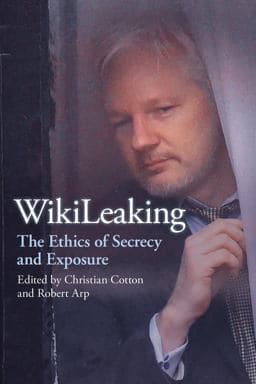
WikiLeaking
Format: Paperback
ISBN13: 9780812699883
Paperback|9780812699883
✨ Featured Offer
Brand New
$23.86
List Price: $27.95
🚚
See all 3 offers from $12.87 FREE standard delivery by: 04 Apr 2026
Overview
WikiLeaks is famous--or infamous--for publishing secret material, including classified government documents, confidential videos and emails, and information leaked by whistleblowers, some of them anonymous, others revealing their identities. WikiLeaks claims to have compiled a database of more than ten million "forbidden" documents. Its founder and leader, Australian activist Julian Assange proclaims that the public is entitled to the truth and that "information wants to be free."
WikiLeaks activities have polarized opinion, with some claiming its operations are traitorous and harmful, and others defending its releases as necessary exposure of wrongdoing.
In WikiLeaking: The Ethics of Secrecy and Exposure, professional philosophers with diverse opinions and backgrounds deliver their provocative insights into WikiLeaks.
● If leaking secrets sometimes causes harm, can this harm be outweighed by the benefit of more people knowing the truth?
● How much of WikiLeaks information is true, and does it matter that some of it might be erroneous or misleading through lack of context?
● Is the prevalence of leaking an automatic outcome of the value of free expression, as enshrined in the First Amendment?
● If it's wrong to lie, does this imply that it's always right to speak the truth?
● Does selective media bias require to be countered by unpredictable leaking?
● Can there be too much information? And if so, how can citizens protect themselves against information overload?
● WikiLeaks activists are guided by a code of ethics. How does this compare with the professional ethics of conventional journalists?
● When French politician Emmanuel Macron included deliberate falsehoods in his emails, knowing they would be leaked, he showed the relation between leaking and "bullshit," as defined by Harry Frankfurt. Can we expect the prevalence of leaking to increase the volume of bullshit?
● The existence of government necessitates the practice of subterfuge and double-dealing by statesmen, but the culture of democracy calls for transparency. How can we fix the boundary between necessary deception and the public's "right to know"?
● Leaking exposes what some powerful person wants to be kept secret. Is leaking always justified whenever that person wants to keep their own immoral actions secret, and is leaking not justified when the keeper of secrets has done nothing wrong?
WikiLeaks activities have polarized opinion, with some claiming its operations are traitorous and harmful, and others defending its releases as necessary exposure of wrongdoing.
In WikiLeaking: The Ethics of Secrecy and Exposure, professional philosophers with diverse opinions and backgrounds deliver their provocative insights into WikiLeaks.
● If leaking secrets sometimes causes harm, can this harm be outweighed by the benefit of more people knowing the truth?
● How much of WikiLeaks information is true, and does it matter that some of it might be erroneous or misleading through lack of context?
● Is the prevalence of leaking an automatic outcome of the value of free expression, as enshrined in the First Amendment?
● If it's wrong to lie, does this imply that it's always right to speak the truth?
● Does selective media bias require to be countered by unpredictable leaking?
● Can there be too much information? And if so, how can citizens protect themselves against information overload?
● WikiLeaks activists are guided by a code of ethics. How does this compare with the professional ethics of conventional journalists?
● When French politician Emmanuel Macron included deliberate falsehoods in his emails, knowing they would be leaked, he showed the relation between leaking and "bullshit," as defined by Harry Frankfurt. Can we expect the prevalence of leaking to increase the volume of bullshit?
● The existence of government necessitates the practice of subterfuge and double-dealing by statesmen, but the culture of democracy calls for transparency. How can we fix the boundary between necessary deception and the public's "right to know"?
● Leaking exposes what some powerful person wants to be kept secret. Is leaking always justified whenever that person wants to keep their own immoral actions secret, and is leaking not justified when the keeper of secrets has done nothing wrong?
| ISBN-13 | 9780812699883 |
|---|---|
| ISBN-10 | 0812699882 |
| Weight | 0.65 Pounds |
| Dimensions | 6.00 x 0.50 x 9.00 In |
| List Price | $27.95 |
| Format | Paperback |
|---|---|
| Language | English |
| Pages | 256 pages |
| Publisher | Open Court |
| Published On | 2019-01-01 |
View All Offers
Sort by:
Price
Condition
Seller
Seller Comments
Price
Used, Very Good
Seller details
EdmondDantes Bookseller
Minneapolis, MN, USA
pp. 256. Softcover Paperback with only minor reading wear; book is clean, unmarked. Ships from MN, U...
Free delivery by: 04 Apr 2026
✨ Brand New
Seller details
Alibris
Sparks, NV, USA
Print on demand Trade paperback (US). Glued binding. 256 p.
Free delivery by: 04 Apr 2026
Used, Good
Seller details
Bonita
Santa Clarita, CA, USA
Access codes and supplements are not guaranteed with used items. May be an ex-library book.
Free delivery by: 04 Apr 2026