
✨ Featured Offer
Used, Good
$54.72
List Price: $54.95
🚚
See all 1 offers from $54.72 FREE standard delivery by: 29 Mar 2026
Overview
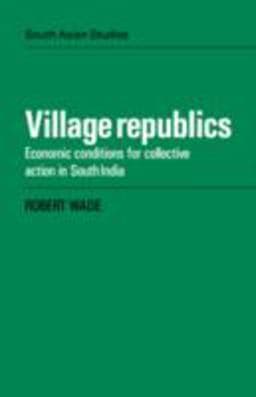
Why do some people get together to manage their common assets? Why do other groups of people leave those assets to be over-exploited by each member of the group? The answers could be crucial to the proper maintenance and use of 'common property resources', from grazing land through fish stocks to irrigation water. Robert Wade, drawing on research in areas of Andhra Pradesh where rain is scarce and unreliable, argues that some villagers develop and finance joint institutions for cooperative management of common property resources in grazing and irrigation - but others do not. The main reason lies in the risk of crop loss.Villages located towards the tail-end of irrigation systems, and with soils fertile enough to support a high density of livestock, show a larger amount of corporate organization than villages elsewhere. Placing his work in the wider context of both the developing world today and the open-field system of medieval Europe, the author argues that peasants can under certain conditions organize collectively. Privatization or state regulation are not the only ways of preventing degradation of common property resources in peasant societies.
| ISBN-13 | 9780521301466 |
|---|---|
| ISBN-10 | 0521301467 |
| Weight | 0.97 Pounds |
| Dimensions | 5.43 x 0.98 x 8.50 In |
| List Price | $54.95 |
| Edition | 1st Edition |
| Format | Hardcover |
|---|---|
| Language | English |
| Pages | 256 pages |
| Publisher | Cambridge University Press |
| Published On | 1988-03-31 |
View All Offers
Sort by:
Price
Condition
Seller
Seller Comments
Price
✨ Used, Good
Seller details
Bonita
Santa Clarita, CA, USA
Access codes and supplements are not guaranteed with used items. May be an ex-library book.
Free delivery by: 29 Mar 2026