
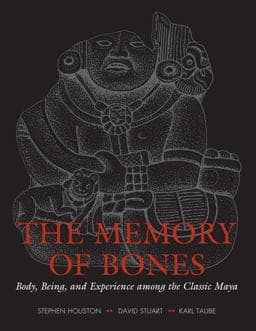
The Memory of Bones
Format: Hardcover
ISBN13: 9780292712942
Out of Stock
Overview
All of human experience flows from bodies that feel, express emotion, and think about what such experiences mean. But is it possible for us, embodied as we are in a particular time and place, to know how people of long ago thought about the body and its experiences? In this groundbreaking book, three leading experts on the Classic Maya (ca. AD 250 to 850) marshal a vast array of evidence from Maya iconography and hieroglyphic writing, as well as archaeological findings, to argue that the Classic Maya developed a coherent approach to the human body that we can recover and understand today.
The authors open with a cartography of the Maya body, its parts and their meanings, as depicted in imagery and texts. They go on to explore such issues as how the body was replicated in portraiture; how it experienced the world through ingestion, the senses, and the emotions; how the body experienced war and sacrifice and the pain and sexuality that were intimately bound up in these domains; how words, often heaven-sent, could be embodied; and how bodies could be blurred through spirit possession.
From these investigations, the authors convincingly demonstrate that the Maya conceptualized the body in varying roles, as a metaphor of time, as a gendered, sexualized being, in distinct stages of life, as an instrument of honor and dishonor, as a vehicle for communication and consumption, as an exemplification of beauty and ugliness, and as a dancer and song-maker. Their findings open a new avenue for empathetically understanding the ancient Maya as living human beings who experienced the world as we do, through the body.
| ISBN-13 | 9780292712942 |
|---|---|
| ISBN-10 | 0292712944 |
| Weight | 2.58 Pounds |
| Dimensions | 8.50 x 1.00 x 11.00 In |
| List Price | $55.00 |
| Format | Hardcover |
|---|---|
| Language | English |
| Pages | 334 pages |
| Publisher | University of Texas Press |
| Published On | 2006-06-01 |
View All Offers
Sort by: