
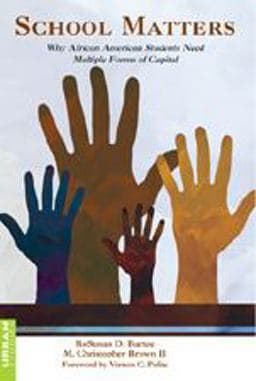
School Matters
by Shirley R. Steinberg (Series edited by)Joe L. Kincheloe (Series edited by)RoSusan BarteeChristopher M. Brown II
Format: Hardcover
ISBN13: 9781433100390
Hardcover|9781433100390
Out of Stock
Overview
There are four types of capital: economic, human, cultural, and social. The distribution of capital in home and school settings affects the types of educational outcomes and the quality of lifelong opportunities that individuals are able to enjoy. Resource availability and accessibility influence the success levels at which teaching and learning is experienced. Capital possession or acquisition impacts the ability to navigate the academic pipeline and to recognize the appropriate tools by which to do so. Minimal attempts have been taken to address different perspectives related to economic, human, cultural, and social capital. This book identifies the various tenets of capital as having shared similarities and/or differences, as well as reveals how the distribution of capital impacts educational settings. More specifically, this book reveals that given the increases in the parental education or the cultural capital of African Americans, no significant changes have occurred in the number of years that African-American children attend schools. This finding remains consistent in terms of the sort of cultural capital that they are able to gain. In sum, the research concludes that cultural capital does assume a significant role in the transfer of advantages that stem from middle- and upper-level socioeconomic backgrounds.
| ISBN-13 | 9781433100390 |
|---|---|
| ISBN-10 | 1433100398 |
| Weight | 1.05 Pounds |
| Dimensions | 6.30 x 0.38 x 9.06 In |
| List Price | $127.15 |
| Edition | 2nd Edition |
| Format | Hardcover |
|---|---|
| Language | English |
| Pages | 178 pages |
| Publisher | Peter Lang Inc., International Academic Publishers |
| Published On | 2007-06-06 |
View All Offers
Sort by:
Price