
✨ Featured Offer
Overview
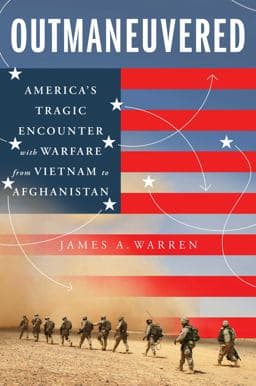
From a celebrated military historian, a highly engaging and thought-provoking exploration of why the United States has failed again and again in irregular wars and military campaigns from Vietnam to Afghanistan.
Since the early 1960s, the United States has fought in four major wars and a cluster of complicated and bloody irregular warfare campaigns. The majority have ended in failure, or something close to it. Why has the US been so ineffective, despite the American armed forces being universally recognized as the best in the world?
Most scholars and analysts believe that the primary cause of our abysmal war record since Vietnam has been the US military's overwhelmingly conventional approach to conflict, which favors kinetic operations, highly mobile precision firepower, and sophisticated systems of command and control. Here, James Warren argues that a much more formidable obstacle to success has been pervasive strategic ineptitude at the highest levels of decision-making, including the presidency, the national security council, and the foreign policy community in DC.
Time and time again, American presidents have committed military forces to operations in foreign countries whose politics and cultures they did not fully understand. Presidents of both political parties, including Johnson, Reagan, Bush, Clinton, and Obama have overestimated the capacity of US forces to alter the social and political landscape of foreign nations, and underestimated the ability of insurgents and terrorists to develop effective protracted war strategies that, in time, sap Washington's will to carry on the fight.
In the War on Terror, Warren asserts that senior military officers have been complicit in extending bankrupt strategies by refusing to speak truthfully about them to their civilian bosses. So have the American people, who lost interest in the conflicts in Afghanistan and Iraq, and refused to press their president and congress to bring an end to two futile conflicts. Warren advocates for a less hubristic foreign policy and a broader conception of warfare as a political and military enterprise.
For readers of political, military, and US history--as well as anyone interested in international relations and geopolitical strategy--this book offers unparalleled insights into America's prior--and potentially future--military conflicts.
Since the early 1960s, the United States has fought in four major wars and a cluster of complicated and bloody irregular warfare campaigns. The majority have ended in failure, or something close to it. Why has the US been so ineffective, despite the American armed forces being universally recognized as the best in the world?
Most scholars and analysts believe that the primary cause of our abysmal war record since Vietnam has been the US military's overwhelmingly conventional approach to conflict, which favors kinetic operations, highly mobile precision firepower, and sophisticated systems of command and control. Here, James Warren argues that a much more formidable obstacle to success has been pervasive strategic ineptitude at the highest levels of decision-making, including the presidency, the national security council, and the foreign policy community in DC.
Time and time again, American presidents have committed military forces to operations in foreign countries whose politics and cultures they did not fully understand. Presidents of both political parties, including Johnson, Reagan, Bush, Clinton, and Obama have overestimated the capacity of US forces to alter the social and political landscape of foreign nations, and underestimated the ability of insurgents and terrorists to develop effective protracted war strategies that, in time, sap Washington's will to carry on the fight.
In the War on Terror, Warren asserts that senior military officers have been complicit in extending bankrupt strategies by refusing to speak truthfully about them to their civilian bosses. So have the American people, who lost interest in the conflicts in Afghanistan and Iraq, and refused to press their president and congress to bring an end to two futile conflicts. Warren advocates for a less hubristic foreign policy and a broader conception of warfare as a political and military enterprise.
For readers of political, military, and US history--as well as anyone interested in international relations and geopolitical strategy--this book offers unparalleled insights into America's prior--and potentially future--military conflicts.
| ISBN-13 | 9781668004555 |
|---|---|
| ISBN-10 | 1668004550 |
| Weight | 1.08 Pounds |
| Dimensions | 6.00 x 1.10 x 9.00 In |
| List Price | $29.99 |
| Format | Hardcover |
|---|---|
| Language | English |
| Pages | 336 pages |
| Publisher | Scribner |
| Published On | 2025-03-04 |
View All Offers
Sort by:
Price
Condition
Seller
Seller Comments
Price
✨ Brand New
Seller details
PlumCircle
West Mifflin, PA, USA
New item in gift quality condition. 99% of orders arrive in 4-10 days.
Free delivery by: 02 Apr 2026
Used, Like New
Seller details
PlumCircle
West Mifflin, PA, USA
Publisher overstock. May have remainder mark / minimal shelfwear. 99% of orders arrive in 4-10 days.
Free delivery by: 02 Apr 2026
Used, Very Good
Seller details
Big River Books
Powder Springs, GA, USA
The dust jacket is missing.
Free delivery by: 02 Apr 2026
Used, Good
Seller details
Big River Books
Powder Springs, GA, USA
This book is in good condition. The cover has minor creases or bends. The binding is tight and pages...
Free delivery by: 02 Apr 2026
Used, Very Good
Seller details
HPB-Diamond
Dallas, TX, USA
Connecting readers with great books since 1972! Used books may not include companion materials, and ...
Free delivery by: 02 Apr 2026