
Out of Stock
Overview
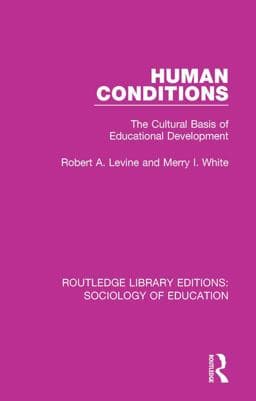
First published in 1986, this book proposes and illustrates a new approach to the comparative analysis of educational policy, based on anthropological and historical inquiry. It reviews the transitions of Western countries, Japan, and the People's Republic of China and in doing so investigates cultural ideas of human potential and how they inform social and economic goals of education. An analysis of the problems and emerging patterns in developing countries reveals how and why the meanings of life for the majority of their populations were still influenced by agrarian cultural models, even after the introduction of new educational and occupational careers.
In place of universalistic economic models and homogenous modernization strategies, the authors propose that culture-specific meanings of education are determined by each country's particular transition from its agrarian past to its socio-economic conditions at the time. They argue that change in educational development has been as varied in ends, means and significance outcomes as the cultures in which it has occurred and point to the need for a deeper understanding of cultural contexts in which policy choices and development plans are made.
| ISBN-13 | 9781351818933 |
|---|---|
| ISBN-10 | 1351818937 |
| List Price | $39.95 |
| Format | - |
|---|---|
| Language | English |
| Pages | 252 pages |
| Publisher | Routledge |
| Published On | 2017-04-28 |
View All Offers
Sort by: