
✨ Featured Offer
Overview
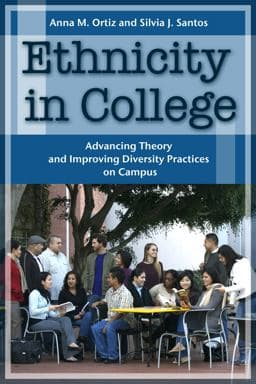
This book explores the importance, and construction, of ethnic identity among college students, and how ethnicity interfaces with students' interactions on campus, and the communities in which they live.
Based on qualitative interviews with White, Latina/o, African American and Asian students, it captures both the college context and the individual experiences students have with their ethnicity, through the immediacy of the students' own voices.
The authors observe how students negotiate their ethnic identity within the process of becoming adults. They identify the influences of family, the importance of socio-historical forces that surround students' educational experiences, and the critical role of peers in students' ethnic identity development.
While research has begun to document the positive outcomes associated with diverse learning environments, this study emphasizes and more closely delineates, just how these outcomes come to be. In addition, the study reveals how the freedom to express and develop ethnic identity, which multicultural environments ideally support, promotes student confidence and achievement in ways which students themselves can articulate.
This work is distinctive in eschewing an ethnic minority perspective through which Whites are the primary reference group, and the standard from which all ethnic and racial identity processes evolve; as well as in considering the influences that growing up in a multi-ethnic context may have on ethnic identity processes, particularly where the "other" is not White. This perspective is particularly important at a time when students entering universities are more likely to come from highly segregated high school environments, and will confront ethnic and social differences for the first time in college.
This book is intended as a resource for researchers and practitioners in psychology and higher education. It offers insights for student affairs and higher education administrators and leaders about the ways in which their campus policies and practices can positively influence the development of more supportive campus climates that draw on the strengths of each ethnic group to create an overarching pluralistic culture. It can also serve as a cultural diversity text for upper division or graduate courses on pluralism. Moreover, understanding students' ethnic identity, their personal growth, and adjustment to college, it is central to preparing individuals for life in a pluralistic society.
Based on qualitative interviews with White, Latina/o, African American and Asian students, it captures both the college context and the individual experiences students have with their ethnicity, through the immediacy of the students' own voices.
The authors observe how students negotiate their ethnic identity within the process of becoming adults. They identify the influences of family, the importance of socio-historical forces that surround students' educational experiences, and the critical role of peers in students' ethnic identity development.
While research has begun to document the positive outcomes associated with diverse learning environments, this study emphasizes and more closely delineates, just how these outcomes come to be. In addition, the study reveals how the freedom to express and develop ethnic identity, which multicultural environments ideally support, promotes student confidence and achievement in ways which students themselves can articulate.
This work is distinctive in eschewing an ethnic minority perspective through which Whites are the primary reference group, and the standard from which all ethnic and racial identity processes evolve; as well as in considering the influences that growing up in a multi-ethnic context may have on ethnic identity processes, particularly where the "other" is not White. This perspective is particularly important at a time when students entering universities are more likely to come from highly segregated high school environments, and will confront ethnic and social differences for the first time in college.
This book is intended as a resource for researchers and practitioners in psychology and higher education. It offers insights for student affairs and higher education administrators and leaders about the ways in which their campus policies and practices can positively influence the development of more supportive campus climates that draw on the strengths of each ethnic group to create an overarching pluralistic culture. It can also serve as a cultural diversity text for upper division or graduate courses on pluralism. Moreover, understanding students' ethnic identity, their personal growth, and adjustment to college, it is central to preparing individuals for life in a pluralistic society.
| ISBN-13 | 9781579223328 |
|---|---|
| ISBN-10 | 157922332X |
| Weight | 1.25 Pounds |
| Dimensions | 5.98 x 0.94 x 9.02 In |
| List Price | $42.95 |
| Edition | 1st Edition |
| Format | Paperback |
|---|---|
| Language | English |
| Pages | 416 pages |
| Publisher | Routledge |
| Published On | 2009-07-20 |
View All Offers
Sort by:
Price
Condition
Seller
Seller Comments
Price
Used, Very Good
Seller details
HPB-Ruby
Dallas, TX, USA
Connecting readers with great books since 1972! Used books may not include companion materials, and ...
Free delivery by: 04 Apr 2026
Used, Like New
Seller details
Books From California
Simi Valley, CA, USA
As New Condition-Over 500, 000 Internet Orders Shipped.
Free delivery by: 04 Apr 2026
Used, Good
Seller details
Bonita
Santa Clarita, CA, USA
Access codes and supplements are not guaranteed with used items. May be an ex-library book.
Free delivery by: 04 Apr 2026
Used, Like New
Seller details
GreatBookPrices-
Columbia, MD, USA
100% Money Back Guarantee. Brand New, Perfect Condition. We offer expedited shipping to all US locat...
Free delivery by: 04 Apr 2026
✨ Brand New
Seller details
GreatBookPrices-
Columbia, MD, USA
100% Money Back Guarantee. Brand New, Perfect Condition. We offer expedited shipping to all US locat...
Free delivery by: 04 Apr 2026