
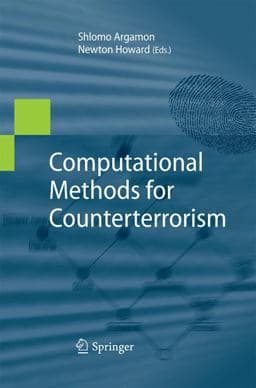
Computational Methods for Counterterrorism
Format: Paperback
ISBN13: 9783642426131
✨ Featured Offer
Brand New
$112.98
List Price: $109.99
FREE standard delivery by: 31 Mar 2026
Overview
Modern terrorist networks pose an unprecedented threat to international security. The question of how to neutralize that threat is complicated radically by their fluid, non-hierarchical structures, religious and ideological motivations, and predominantly non-territorial objectives. Governments and militaries are crafting new policies and doctrines to combat terror, but they desperately need new technologies to make these efforts effective.
This book collects a wide range of the most current computational research that addresses critical issues for countering terrorism, including:
- Finding, summarizing, and evaluating relevant information from large and changing data stores;
- Simulating and predicting enemy acts and outcomes; and
- Producing actionable intelligence by finding meaningful patterns hidden in huge amounts of noisy data.
The book's four sections describe current research on discovering relevant information buried in vast amounts of unstructured data; extracting meaningful information from digitized documents in multiple languages; analyzing graphs and networks to shed light on adversaries' goals and intentions; and developing software systems that enable analysts to model, simulate, and predict the effects of real-world conflicts.
The research described in this book is invaluable reading for governmental decision-makers designing new policies to counter terrorist threats, for members of the military, intelligence, and law enforcement communities devising counterterrorism strategies, and for researchers developing more effective methods for knowledge discovery in complicated and diverse datasets.
| ISBN-13 | 9783642426131 |
|---|---|
| ISBN-10 | 3642426131 |
| Weight | 1.10 Pounds |
| Dimensions | 6.10 x 0.73 x 9.25 In |
| List Price | $109.99 |
| Edition | 1st Edition |
| Format | Paperback |
|---|---|
| Language | English |
| Pages | xviii, 306 pages |
| Publisher | Springer |
| Published On | 2014-11-26 |
View All Offers
Sort by:
Seller details
Sparks, NV, USA
Free delivery by: 31 Mar 2026