
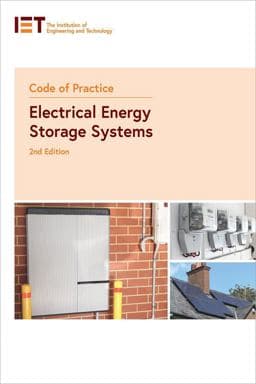
Code of Practice for Electrical Energy Storage Systems
Format: Paperback
ISBN13: 9781839530418
Out of Stock
Overview
Electrical Energy Storage Systems (EESS) provide storage of electrical energy so that it can be used later. EESS may be installed for a variety of reasons, for example increasing the 'self-consumption' of buildings fitted with renewable energy systems; arbitrage services; ancillary services and providing a back-up or alternative power supply.
This Code of Practice looks at EESS applications and provides information for practitioners to safely and effectively specify, design, install, commission, operate and maintain a system.
The scope of this Code of Practice includes EESS intended for fixed installation applications including:
- individual dwellings;
- commercial applications, including multi-occupancy buildings and multi-occupancy residential buildings;
- industrial applications
and covers:
- electrochemical energy storage systems in electrical installations;
- integration into low voltage (LV) power systems (AC and DC) and
- systems aligned with existing standards, regulations and guidance.
This second edition of the Code of Practice builds on the first edition and provides the most up-to-date guidance to help support the growth of the electrical energy storage market. It has been updated to take account of developments in the industry, progress in standardization and address emerging technical challenges such as arc flash risk assessments.
- electrochemical energy storage systems in electrical installations;
- integration into low voltage (LV) power systems (AC and DC) and
- systems aligned with existing standards, regulations and guidance.
This second edition of the Code of Practice builds on the first edition and provides the most up-to-date guidance to help support the growth of the electrical energy storage market. It has been updated to take account of developments in the industry, progress in standardization and address emerging technical challenges such as arc flash risk assessments.
- electrochemical energy storage systems in electrical installations;
- integration into low voltage (LV) power systems (AC and DC) and
- systems aligned with existing standards, regulations and guidance.
This second edition of the Code of Practice builds on the first edition and provides the most up-to-date guidance to help support the growth of the electrical energy storage market. It has been updated to take account of developments in the industry, progress in standardization and address emerging technical challenges such as arc flash risk assessments.
- electrochemical energy storage systems in electrical installations;
- integration into low voltage (LV) power systems (AC and DC) and
- systems aligned with existing standards, regulations and guidance.
This second edition of the Code of Practice builds on the first edition and provides the most up-to-date guidance to help support the growth of the electrical energy storage market. It has been updated to take account of developments in the industry, progress in standardization and address emerging technical challenges such as arc flash risk assessments.
of Practice builds on the first edition and provides the most up-to-date guidance to help support the growth of the electrical energy storage market. It has been updated to take account of developments in the industry, progress in standardization and address emerging technical challenges such as arc flash risk assessments.| ISBN-13 | 9781839530418 |
|---|---|
| ISBN-10 | 1839530413 |
| Weight | 1.27 Pounds |
| Dimensions | 8.27 x 0.00 x 11.69 In |
| List Price | $118.00 |
| Edition | 2nd Edition |
| Format | Paperback |
|---|---|
| Language | English |
| Pages | 174 pages |
| Publisher | The Institution of Engineering and Technology |
| Published On | 2021-02-12 |
View All Offers
Sort by: