
✨ Featured Offer
Overview
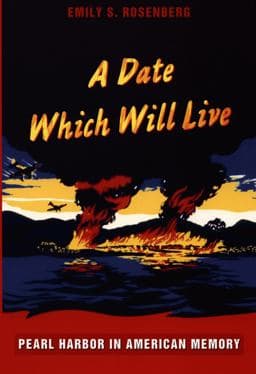
December 7, 1941--the date of Japan's surprise attack on the U.S. fleet at Pearl Harbor--is "a date which will live" in American history and memory, but the stories that will live and the meanings attributed to them are hardly settled. In movies, books, and magazines, at memorial sites and public ceremonies, and on television and the internet, Pearl Harbor lives in a thousand guises and symbolizes dozens of different historical lessons. In A Date Which Will Live, historian Emily S. Rosenberg examines the contested meanings of Pearl Harbor in American culture.
Rosenberg considers the emergence of Pearl Harbor's symbolic role within multiple contexts: as a day of infamy that highlighted the need for future U.S. military preparedness, as an attack that opened a "back door" to U.S. involvement in World War II, as an event of national commemoration, and as a central metaphor in American-Japanese relations. She explores the cultural background that contributed to Pearl Harbor's resurgence in American memory after the fiftieth anniversary of the attack in 1991. In doing so, she discusses the recent "memory boom" in American culture; the movement to exonerate the military commanders at Pearl Harbor, Admiral Husband Kimmel and General Walter Short; the political mobilization of various groups during the culture and history "wars" of the 1990s, and the spectacle surrounding the movie Pearl Harbor. Rosenberg concludes with a look at the uses of Pearl Harbor as a historical frame for understanding the events of September 11, 2001.
Rosenberg considers the emergence of Pearl Harbor's symbolic role within multiple contexts: as a day of infamy that highlighted the need for future U.S. military preparedness, as an attack that opened a "back door" to U.S. involvement in World War II, as an event of national commemoration, and as a central metaphor in American-Japanese relations. She explores the cultural background that contributed to Pearl Harbor's resurgence in American memory after the fiftieth anniversary of the attack in 1991. In doing so, she discusses the recent "memory boom" in American culture; the movement to exonerate the military commanders at Pearl Harbor, Admiral Husband Kimmel and General Walter Short; the political mobilization of various groups during the culture and history "wars" of the 1990s, and the spectacle surrounding the movie Pearl Harbor. Rosenberg concludes with a look at the uses of Pearl Harbor as a historical frame for understanding the events of September 11, 2001.
| ISBN-13 | 9780822336372 |
|---|---|
| ISBN-10 | 0822336375 |
| Weight | 0.67 Pounds |
| Dimensions | 6.50 x 0.62 x 9.50 In |
| List Price | $26.95 |
| Format | - |
|---|---|
| Language | English |
| Pages | 247 pages |
| Publisher | Duke University Press Books |
| Published On | 2005-08-02 |
View All Offers
Sort by:
Price
Condition
Seller
Seller Comments
Price
Used, Good
Seller details
Zoom Books East
Glendale Heights, IL, USA
Book is in very good condition and may include minimal underlining highlighting. The book can also i...
Free delivery by: 30 Mar 2026
Used, Good
Seller details
HPB-Red
Dallas, TX, USA
Connecting readers with great books since 1972! Used textbooks may not include companion materials s...
Free delivery by: 30 Mar 2026
Used, Good
Seller details
SurplusTextSeller
Columbia, MO, USA
Ships in a BOX from Central Missouri! May not include working access code. Will not include dust j...
Free delivery by: 30 Mar 2026
✨ Brand New
Seller details
Alibris
Sparks, NV, USA
Print on demand Trade paperback (US). Glued binding. 248 p. Contains: Unspecified. American Encount...
Free delivery by: 30 Mar 2026
Used, Good
Seller details
Bonita
Santa Clarita, CA, USA
Access codes and supplements are not guaranteed with used items. May be an ex-library book.
Free delivery by: 30 Mar 2026